
There’s still a place for the Casual Landlord

Over the last decade, the UK Private Rental Sector (PRS) has shown pretty decent overall growth despite ever-increasing regulations, but there have been trends under the surface – there has been a strong expansion in tenant numbers and rents countered by a subtle shift away from the smaller ‘casual landlord’ portfolios toward larger corporate landlords.
In fact, many of our smaller ‘casual landlords’ have commented that it feels as if the ground is permanently shifting under their feet. Rents are going up, which is good; tenant demand is strong, which is also good; but the regulatory landscape has never been more complicated and evolving.

We’ve all seen the headlines about small landlords exiting the market, the burden of compliance getting ever larger, and the feeling that yesterday’s simple buy-to-let idea is a thing of the past. All this is true, but what the headlines don’t say is that the small landlords who partner with experts will be the real winners. At Urpad, we provide the same service whether you have one property or one hundred. We know the market, the legislation, and the best ways to keep all parties happy. We also have years of experience and have weathered all storms.
Whether you’re holding steady or rethinking your strategy, our team can help lighten the load as the sector evolves
Are you casual or corporate?
Over the past decade, the UK’s PRS has ballooned – tenant households have jumped from around 4.7 million in 2017/18 to over 5.8 million by 2023, and total rent has reached £71.5 billion in England and Wales. What isn’t spoken about so much is who owns what.
Data from the Deposit Protection Service shows the comparison between October 2024 and October 2025:
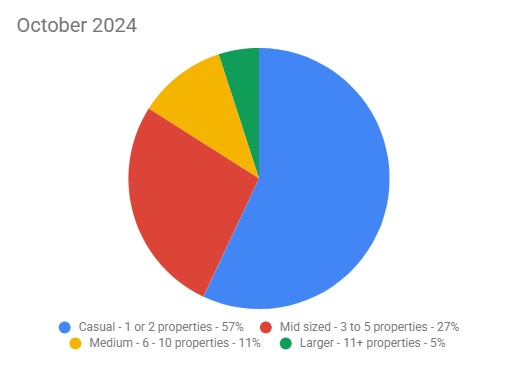

These stats show that properties once rented affordably by local ‘mum-and-dad’ landlords are being snapped up by scaled investors or limited companies (there are now over 400,000 of them), who are treating renting as a formal business.
For casual landlords, this shift leads to challenges. Self-managing a single property worked when rules were lighter, but now it’s a full-time job. Analysis by Hamptons has shown that there have been more landlord sales than purchases since 2016, especially among the casual landlord who depends on a mortgage. The result? A maturing market where expertise and professional support matter more than ever.
Regulations hitting smaller landlords hardest
Every conversation about the shifting portfolio ownerships seems to stem from the seemingly never-ending regulation – the Renters’ Rights Act 2025, phasing out Section 21 no-fault evictions, higher stamp duty surcharges, selective licensing fees, MTD, and potential National Insurance on rental income.
These hit casual portfolios hard, and the small landlord, often without a dedicated admin, faces paperwork overload – gas safety certs, EPC upgrades to C by 2030, and database registrations like the UK’s new landlord database. The ‘quiet war on small landlords,’ as one analysis puts it, is the culmination of successive governments, both Conservative and Labour, targeting individuals through tax tweaks such as Section 24’s mortgage interest relief cuts. Larger players dodge taxes through company structures with lower effective tax rates, while casuals foot the bill, prompting them to leave.
The policies are meant to professionalise the industry, and that’s coming, but they’re also risking shrinking the supply of properties, thereby directly harming tenants. Joseph Rowntree Foundation warns of stagnation in small-scale BTL, leading to higher rents and less choice – especially at the affordable end. Casual landlords traditionally offered flexibility and personal service – 70% tenant satisfaction with direct landlords vs. 62% for agents – but regulations are forcing them to pack up and leave the industry.

Not all doom & gloom
If you’re reading this as a casual landlord you might be feeling the squeeze. There are higher rates, softer demand dips in 2025, and more power going to the hands of tenant groups. Some casual landlords are shifting to short-term lets or temporary accommodation for better yields, but this is further straining long-term PRS supply.
Yet the PRS isn’t shrinking overall; it’s evolving. Growth hit 20% of households in England/Wales by 2021 (up from 17%). Rents for new lets continue rising, buoyed by demand from 25-44-year-olds (over half of PRS heads). Casual landlords can adapt, and many are forming small limited companies or partnering with those who know what’s happening and can work with the casual landlord for the benefit of everyone.
Partner up
At Urpad Property Management, we specialise in helping smaller landlords thrive. Things may look more difficult today than yesterday, but you’re not alone. Our expertise covers full compliance – eviction processes under new rules, licensing, EPCs, and tenant vetting – to help you understand what, when, where, why and how.
We handle everything: rent collection, maintenance (with vetted tradespeople), inspections, and even portfolio growth advice. It’s in our best interests to maximise yields while keeping your casual setup simple, and your tenants happy.
If you’d like to find out more about how we can work together, contact us today for a free consultation. We’re not just managers; we’re your bridge to the professionalised PRS. Stay invested, stay compliant, stay profitable.